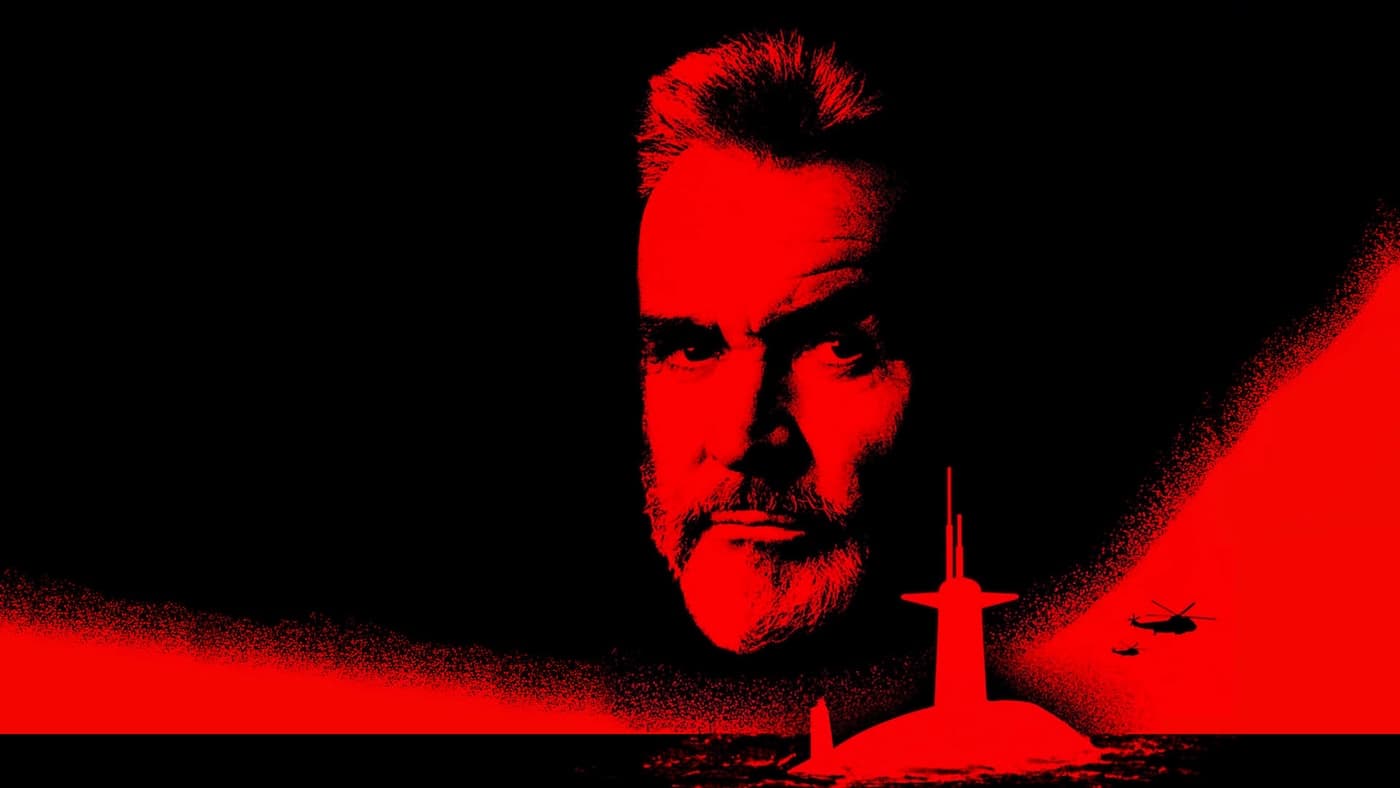
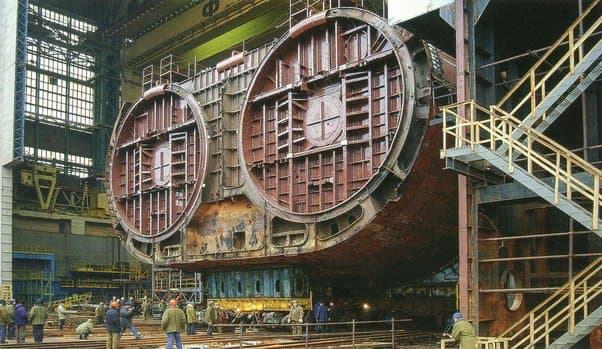
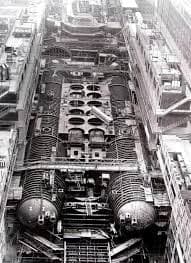
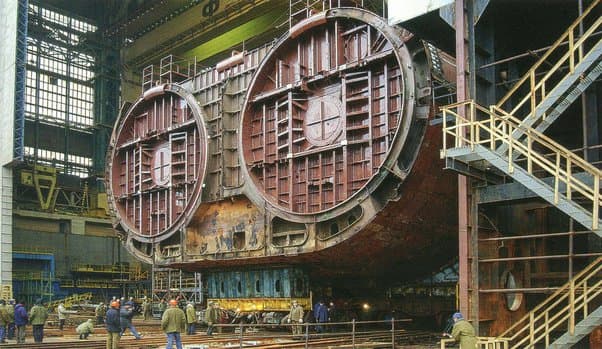
I've got an enormous amount to do and things feel in disarray, at the moment, but I'm doing a little bit of work while I watch one of my favourite childhood films: The Hunt for Red October. I have seen this movie so many times, I know almost every line of dialogue. I decided to watch today as I saw a Hunt for Red October movie production mini documentary that went into the production and how they made it. Thirty minutes later, I'm watching the real thing with a cup of coffee. I loved it at the time because (i) Sean Connery, Sam Neil, Alex Baldwin, Tim Curry (ii) Submarine movies are great (iii) There's something special about the pre-cgi movie era, and the pre golden age of TV streaming where every week's episode is bigger budget than a whole movie. The music and practical effects have a cinematic quality that you don't get these days, music and something about the production style of 80s and 90s style movies. It feels less big and visually spectacular than the same movie made today, but somehow more immersive as a story (iv) I find the cold war completely fascinating as a period of history. Although it feels less fascinating and more frightening living through Cold War II right now with the AI arms race and new geopolitical tensions. I think I've been on a bit of a Soviet Union neurodiverse deep dive after rewatching For All Mankind and the new spin off Star City. A few days ago, I fell down a YouTube hole learning about the development of the Soviet Typhoon class submarine (which is what The Red October was based on in the movie). https://youtu.be/2On_NsAcukk?si=82b8KPrSCFdmHYQJ I had just assumed that it was a big Russian submarine (with the fictional Caterpillar drive added for the movie). But it turns out it was a remarkably audacious thing of a completely different scale than the movie ever suggested. It mentions a few times that "she's big", even saying that she's bigger than the real life Typhoon. But the real Typhoon was really remarkable. It was designed to be able to hold the new generation of Soviet nuclear missiles, but these were physically more massive than anything deployed from a submarine before (16.1 m (52.8 ft) long and 84,000 kg (185,000 lb). Conventional thinking would be a big pressurised cylinder, but something large enough to accommodate two rows of these beasts would have been so massive that there would have been structural challenges that would likely have been insurmountable. Not to mention that it would have required a new set of facilities to build something like this. So they came up with a truly unconventional design: A catamaran wrapped in another hull; It was effectively two submarines built in parallel with two reactors and another hull wrapped around them. In between the two hulls were the two giant banks of the strategic nuclear missiles. Because the sub was so big and like a big brick moving through the water, the design meant it was going to be noisy... Which is the opposite of what you want when designing a submarine. But it turned out to be not as noisy as the size and scope should have made it: The Soviet designers extensively tested the shape of the hull using models in tanks to minimise backwash and turbulent eddies, cowled the props and mounted the machinery on floating beds / decoupled platforms to minimise vibrations. So it was quieter than it had any right to be, but still noisy. Consequently, it's operating model was that it would creep beneath Arctic ice rather than cruise in deep water where it would be harder to detect and punch through the ice when ordered to launch. The really wild stuff was probably not known at time of making the movie. The unconventional design of the two pressure hulls arranged as a catamaran with the missile bays in-between meant there was large voids of empty space that were unused. The Soviet leadership decided to make use of this space by implementing surprising crew comfort features. It had s swimming pool, a traditional sauna, daylight solarium, and even an arboretum with real plants inside. When the CIA started to see images of this being built, they couldn't quite believe the scope of what they were seeing. Apparently they struggled to get the book adapted into a movie as there was a feeling that the story might be too intricate for cinema going audiences of the early 90s. It's interesting how audiences were only trusted with simple plots, goodies & baddies, uncomplicated motives and relatively one dimensional archetypal characters. The movie has a few interesting directorial choices to make it easier for audiences to follow. One clever trick is that there are three submarines and each is given unique lighting and aesthetic to help the viewer not get lost. For example the Red October is full of chrome accents and blue lighting, while the American sub has a different aesthetic and red lighting accents. It's cleverly done in the movie and I'd never noticed it before. But I remember my Grandad declining to watch it with me in my teens because "it was a bit too involved". Apparently he found it too complex and didn't enjoy having to work so hard to enjoy a war movie. I also wonder if he found it complicated the protagonists being Russians? Either way - it was a big favourite of mine in my youth. I haven't watched it in years, partly because I don't watch as much classic man movies these days and actually I think what was too complicated a plot for the early 90s feels a little simple in 2026. I think the golden age of television has brought us shows with complex, nuanced multi dimensional characters, murky factions and no real sense of black and white in the stories we enjoy.
Comments(1)
It's such a 90s man movie. Gates McFadden (Dr Crusher in Star Trek), plays Jack Ryan's wife and is pretty much the only female character in the movie (excluding his daughter). It's not hard to see why the explosion of anti-woke sentiment and man-o-sphere stuff is happening when your typical straight, white, normie Man media was a diet of stories that featured only mens perspectives and agency.